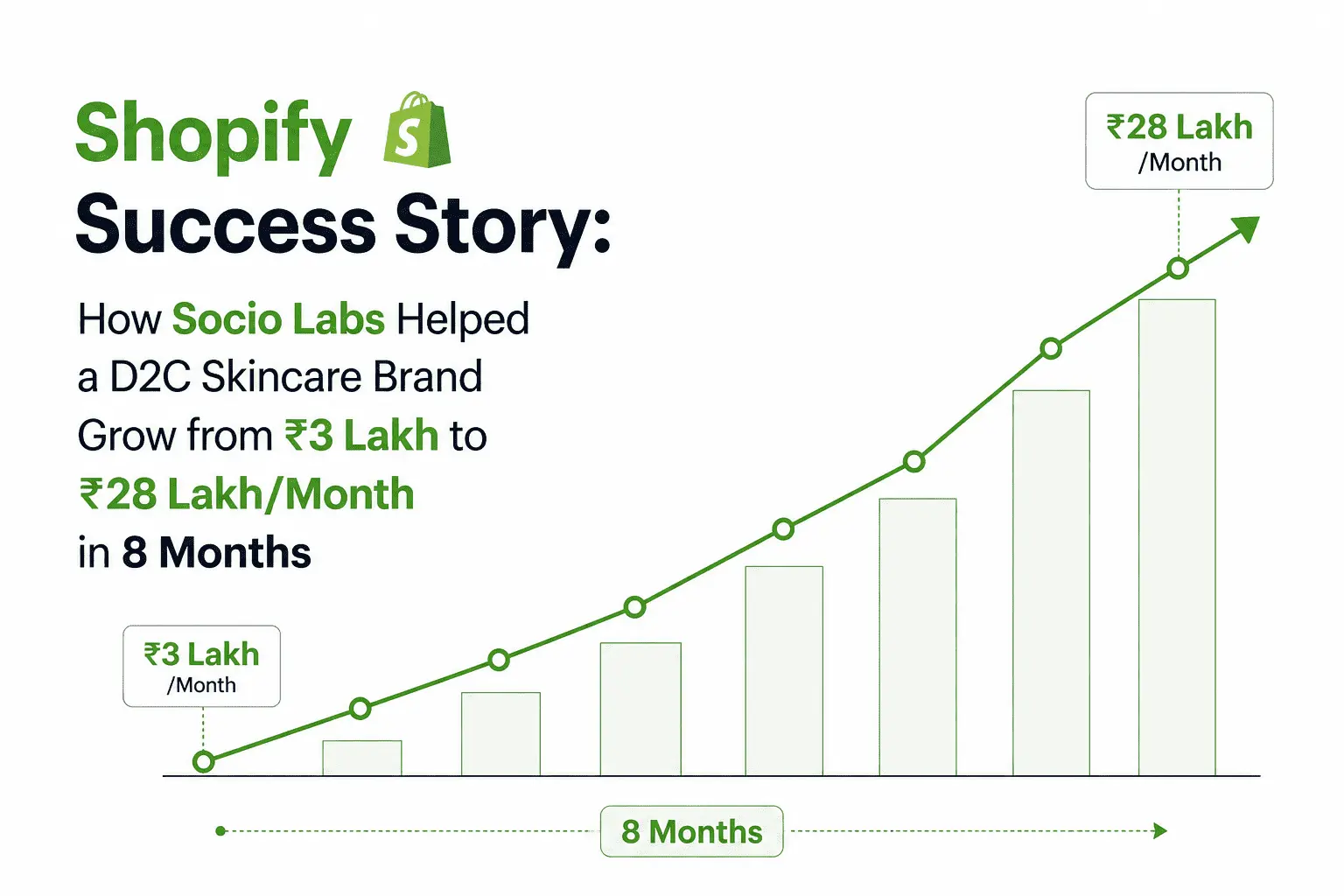
Shopify Success Story: How Socio Labs Helped a D2C…
A Strategic Framework by Socio Labs — India’s Leading…
Slow Pages Kill Conversions. Fix Your Slow Shopify Store Today and Turn Lost Visitors Into Loyal Customers.
Here is the truth most Shopify store owners do not want to hear — if your store takes more than three seconds to load, you have already lost over half your potential customers. They did not bounce because your product was wrong. They left because your store was slow. And every single day that passes without fixing your slow Shopify store is a day your competitors are taking those customers instead.
Our Shopify performance optimization service is built for one purpose — to make your store faster, leaner, and more profitable. Whether you need to improve Shopify speed across your entire storefront, fix a slow Shopify store that is dragging down your conversions, or implement deep technical Shopify performance optimization that pushes your Google PageSpeed scores into the green—we have the expertise, the tools, and the track record to deliver measurable results.
Speed is not a technical vanity metric. Speed is revenue. And we are here to help you reclaim every sale that a slow store has been silently stealing from you.


Shopify performance optimization is the technical process of identifying, diagnosing, and resolving every factor that causes your Shopify store to load slowly, perform poorly on mobile, score low on Google PageSpeed Insights, and fail Core Web Vitals assessments.
It is not a single fix. It is a systematic, multi-layered technical intervention that addresses everything from bloated app code and unoptimized images to inefficient Liquid templates, render-blocking scripts, and poorly configured third-party integrations.
When you improve Shopify speed through professional optimization, you are not just making pages load faster. You are improving your Google search rankings, reducing paid advertising cost-per-click through better quality scores, increasing conversion rates across every device, reducing cart abandonment caused by frustrating load times, and delivering the kind of seamless shopping experience that turns one-time buyers into repeat customers.
To fix a slow Shopify store properly, you need to understand what is actually causing the slowness — and that requires deep technical expertise, not surface-level adjustments. Our Shopify performance optimization service provides exactly that depth of diagnosis and intervention.
Trusted over 1800+ clients
Most Shopify store owners know their store is slow. What they do not know is how much it is costing them. Consider these facts:
A one-second delay in page load time reduces conversions by up to 7%. A store loading in five seconds versus one second sees up to 70% higher bounce rates. Google uses Core Web Vitals as a direct ranking factor—a slow store ranks lower and costs more per click in paid search. Mobile users, who represent over 70% of eCommerce traffic in 2026, are the least tolerant of slow load times and the most likely to abandon a store that does not respond instantly.
Every day you wait to fix your slow Shopify store, you are losing sales you will never recover. Here is what is typically causing the problem:
Our Shopify performance optimization process identifies every one of these issues in your specific store and resolves them systematically — delivering measurable speed improvements you can see, test, and track.
Rated Best Performance Agency 2019 By Facebook Business Partners
#1 Search Result For Performance Marketing in India
#1 Search Result For Best Digital Marketing Company in India
Before we fix anything, we understand everything. Our Shopify performance optimization engagement begins with a thorough technical audit of your entire store — not just your homepage. We test every key page type, including homepage, collection pages, product pages, cart, and search results, across desktop and mobile using Google PageSpeed Insights, GTmetrix, WebPageTest, and Lighthouse.
We identify every performance bottleneck, prioritize issues by their impact on speed and conversion, and deliver a detailed audit report that tells you exactly what is wrong, why it matters, and how we plan to fix it. This audit alone is worth the investment—because understanding your store's specific problems is the first step to resolving them permanently.
Images are typically the single largest contributor to page weight on a Shopify store. Our image optimization process compresses every image without visible quality loss, converts images to next-generation formats including WebP and AVIF that deliver 30 to 50% smaller file sizes than JPEG or PNG, implements responsive image delivery so mobile devices receive appropriately sized images rather than desktop-scale files, adds lazy loading to all below-the-fold images so they do not block initial page rendering, and configures proper image dimensions to eliminate layout shift.
When we improve Shopify speed through image optimization alone, most stores see immediate load time reductions of one to two seconds—before we have touched a single line of code.
Apps are one of the most common and most damaging causes of a slow Shopify store. Every app you install adds code to your store — and many apps load their JavaScript and CSS on every page, even pages where the app is not active. Over time, as apps are installed, tested, and sometimes uninstalled, their code often remains embedded in your theme—loading invisibly and slowing your store down for no benefit whatsoever.
Our app audit process reviews every app currently installed on your store, identifies which apps are contributing to performance problems, recommends consolidation or replacement with lighter alternatives where appropriate, removes all orphaned code left behind by previously uninstalled apps, and implements conditional loading for remaining apps so their code only loads on pages where it is actually needed.
This phase of Shopify performance optimization frequently delivers some of the most dramatic speed improvements—because the problem is often not one bad app, but the cumulative weight of ten apps that each add a small delay.
Unoptimized JavaScript and CSS are silent page speed killers. Our Shopify performance optimization process minifies all JavaScript and CSS files to remove unnecessary whitespace and comments, defers non-critical JavaScript so it does not block initial page rendering, eliminates render-blocking scripts that prevent your page from displaying until external resources have fully loaded, removes unused CSS rules that add file size without contributing to your store's appearance, and implements code splitting where appropriate so only the code needed for each specific page is loaded.
For stores where we need to fix a slow Shopify store caused primarily by JavaScript bloat, this phase can reduce total page weight by 40 to 60% and improve time to interactive by two seconds or more.
Shopify's Liquid templating language is powerful, but inefficient Liquid code creates real performance problems at the server rendering level — before your page even begins loading in the browser. Our development team reviews your theme's Liquid templates and optimizes database queries within templates, removes redundant or duplicate code blocks, improves loop efficiency to reduce server processing time, eliminates unnecessary Liquid includes that add rendering overhead, and refactors complex template logic that is contributing to slow Time to First Byte.
This level of Shopify performance optimization requires deep Shopify development expertise — and it delivers improvements that no surface-level speed tool can replicate.
Google's Core Web Vitals are the three performance metrics that directly impact your search engine rankings: Largest Contentful Paint, measuring how quickly your main content loads; Cumulative Layout Shift, measuring visual stability as your page loads; and Interaction to Next Paint, measuring how quickly your store responds to user interactions.
Failing Core Web Vitals means lower search rankings, higher cost-per-click in Google Ads, and a worse user experience. Our Shopify performance optimization process specifically targets all three metrics—optimizing your hero images and above-the-fold content for LCP, eliminating layout shift caused by images without dimensions and dynamically injected content for CLS, and optimizing event handlers and third-party script loading for INP.
When we improve Shopify speed through Core Web Vitals optimization, you get better rankings, lower ad costs, and higher conversions simultaneously.
Web fonts are frequently overlooked in Shopify performance optimization but contribute meaningfully to both page weight and visual stability. We audit your current font loading strategy, reduce the number of font families and weights being loaded to only what is genuinely needed, implement font-display swap to prevent invisible text during font loading, self-host critical fonts to eliminate third-party DNS lookups, and use font subsetting to load only the character sets your store actually uses.
Google Analytics, Meta Pixel, Google Tag Manager, Hotjar, Klaviyo, review widgets, chat tools, and loyalty program scripts — every third-party tool you use adds JavaScript that needs to load and execute on your store. Without careful management, these scripts pile up and create significant performance drag.
Our Shopify performance optimization approach consolidates all third-party tracking through Google Tag Manager where possible, defers noncritical scripts until after initial page load, removes duplicate or redundant tracking implementations, and audits every third-party script for necessity—challenging your team on whether each tool's value justifies its performance cost.
Given that over 70% of Shopify traffic in 2026 arrives on mobile devices, mobile performance is not a secondary consideration — it is the primary one. Our mobile-specific Shopify performance optimization covers responsive image delivery at appropriate mobile resolutions, touch interaction responsiveness, mobile-specific CSS optimization, tap target sizing for easier mobile navigation, and testing across real mobile devices and network conditions to ensure performance holds up outside of ideal testing environments.
We fix slow Shopify store experiences on mobile devices that often perform significantly worse than desktops—closing the gap and capturing the majority of your potential customers at their moment of highest purchase intent.
For stores where the theme itself is the root cause of performance problems — heavily customized themes with years of added code, outdated themes built before modern performance standards, or premium themes that were never optimized for production use — the most impactful intervention is a theme rebuild or migration to a modern, performance-optimized base theme.
We evaluate whether targeted optimization or a full rebuild is the right approach for your situation, and we deliver whichever solution provides the best commercial outcome. A complete theme rebuild for performance, when necessary, can improve Shopify speed by three seconds or more and is often the only path to achieving genuinely competitive Core Web Vitals scores.
We run an initial speed assessment of your store across key pages and devices, share a high-level overview of the primary performance issues we identify, and discuss your current situation, goals, and timeline. This gives you an immediate understanding of where your store stands and what opportunity exists to improve Shopify speed.
We conduct a deep technical audit covering every performance dimension — page weight, server response time, script loading, image optimization status, Core Web Vitals scores, mobile performance, app impact analysis, and Liquid code efficiency. We document every issue, its severity, and its estimated impact on your load time and conversion rate.
We present a prioritized optimization roadmap that sequences improvements by impact — ensuring the highest-value fixes happen first and you see measurable improvement Shopify speed gains as quickly as possible in the engagement.
We implement optimizations in stages — working on a development copy of your store, testing at each stage, and validating improvements before pushing changes live. This staged approach ensures we never inadvertently introduce new issues while resolving existing ones.
At every stage of implementation, we run before-and-after performance benchmarks to measure the impact of each optimization. You see exactly how each change contributes to your overall speed improvement — in seconds saved, PageSpeed points gained, and Core Web Vitals scores improved.
We deploy all optimizations to your live store during a low-traffic window, run a comprehensive final test suite across devices and browsers, and confirm all performance targets have been achieved before signing off.
We set up ongoing performance monitoring so you receive alerts if new apps, theme changes, or content additions cause your store speed to regress, and we provide ongoing optimization support to maintain and build on the performance gains we have delivered.
If your Google PageSpeed score is below 50 on mobile, you are in the danger zone — losing organic rankings, paying more per click, and converting far fewer customers. Professional Shopify performance optimization is urgent at this stage.
If you are spending on Google, Meta, or TikTok ads, slow landing pages destroy your return on ad spend. Every conversion improvement from speed optimization directly boosts your advertising ROI and reduces wasted budget.
If your analytics show high bounce rates—especially on mobile—slow load time is likely the cause. Reducing load time by even two seconds can lower bounce rates by 30–40% and increase user engagement significantly.
Core Web Vitals are a confirmed Google ranking factor. If they are failing, your SEO efforts are limited. Shopify performance optimization brings your metrics into the green and unlocks the full potential of your SEO strategy.
If your store has more than ten apps—popups, reviews, loyalty, chat, or personalization—app code bloat is likely slowing you down. Our audit and optimization process removes unnecessary weight and improves performance.
As your traffic grows, performance issues multiply. A store that feels fast at 1,000 visitors can slow down at 10,000. Scalable Shopify performance optimization ensures your speed and conversions stay strong as you grow.
Don’t wait to get noticed.
Call us today and start generating quality leads with high-performing digital marketing strategies that drive growth and ROI.
We have delivered Shopify performance optimization for stores across fashion, health, electronics, home goods, beauty, and dozens of other industries. Our team combines deep Shopify development expertise with genuine performance engineering knowledge — not just running standard optimization plugins, but understanding the technical root cause of every performance problem and resolving it properly.
We never apply generic fixes to specific problems. Every Shopify performance optimization engagement begins with a thorough diagnosis of your specific store's specific issues. The prescription matches the diagnosis — always.
Every optimization we implement is benchmarked before and after. You know exactly what each change delivered in measurable performance improvement. There is no ambiguity about what you are getting for your investment.
We do not apply temporary patches that degrade over time. Our Shopify performance optimization work addresses root causes — so the speed improvements we deliver persist and compound, rather than fading within weeks of implementation.
Our optimization decisions are always commercial decisions first. We prioritize improvements that deliver the most impact on conversion rate and revenue — not just the ones that improve a number on a speed testing tool.
All optimization work is done on development environments first, tested comprehensively, and deployed to live stores during low-traffic windows. Your store keeps trading throughout the entire process with zero customer-facing disruption.
Our Shopify performance optimization practice uses the most reliable and comprehensive performance tooling available:
We stay current with Google’s evolving Core Web Vitals standards, Shopify’s platform performance updates, and the latest browser rendering optimizations—ensuring our Shopify performance optimization approach reflects 2026 best practices, not outdated techniques.
Consistent results our Shopify performance optimization service delivers:
A Strategic Framework by Socio Labs — India’s Leading…
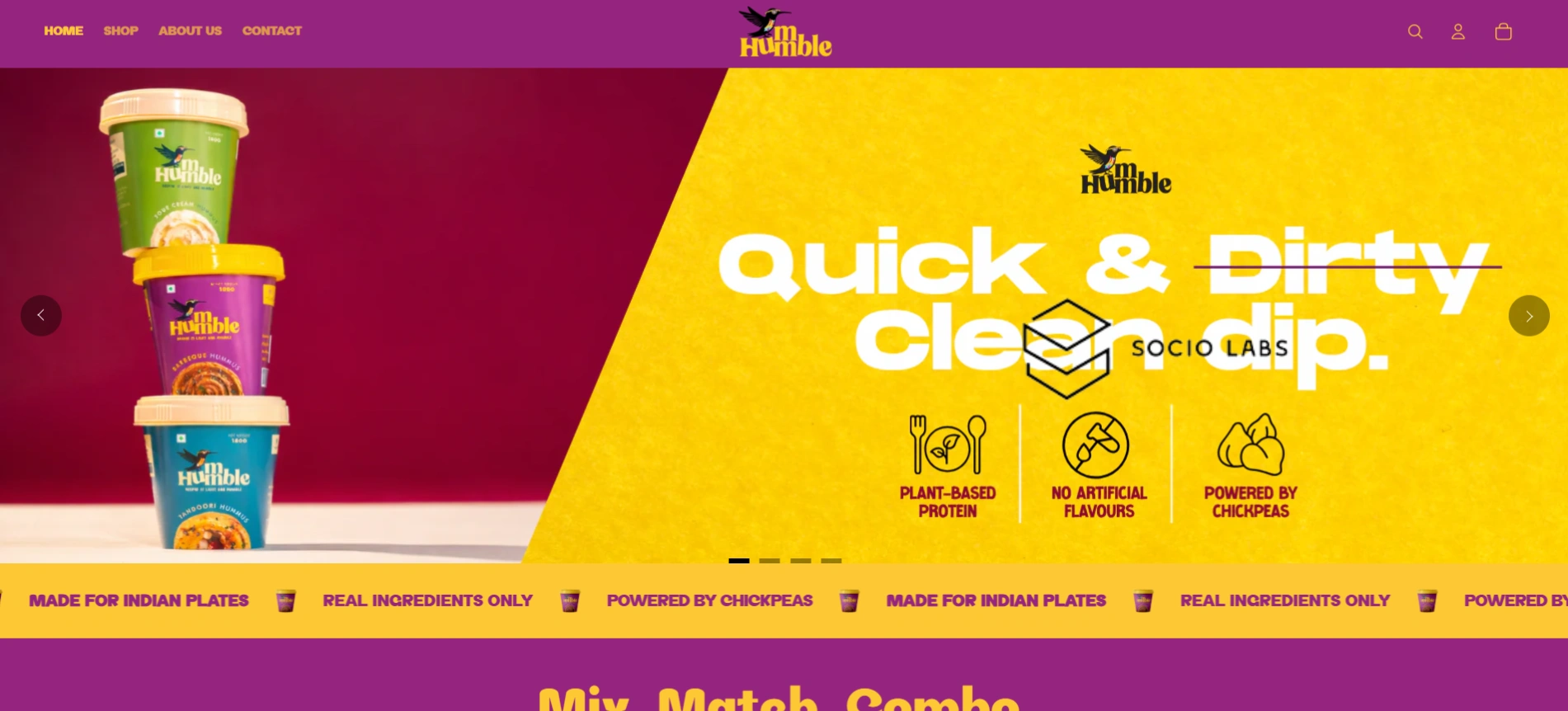
Shopify E-commerce / D2C (Packaged Foods – Hummus &…

E-commerce / D2C (Kids Party Supplies & Celebration Kits)…
Once your store is fast, make sure everything else is working to convert that traffic into revenue:
You have invested in products, photography, advertising, and branding. You have driven traffic to your store. And then a slow page load has silently turned away the customers you worked so hard to reach—before they ever saw what you had to offer.
That ends today.
Our Shopify performance optimization service exists to make sure that every visitor you earn has the fastest, smoothest, most confidence-inspiring experience your store can deliver. Because when your store loads in under a second, when your pages are lean and responsive, and when your Core Web Vitals are green and your checkout is instant—your store stops being an obstacle and starts being your greatest sales asset.
We have helped brands fix slow Shopify stores that were hemorrhaging sales, improve Shopify speed from embarrassing to exceptional, and deliver Shopify performance optimization results that pay for themselves in the first month of improved conversions. We are ready to do the same for you.
The clearest indicators that you need to improve Shopify speed are a Google PageSpeed score below 60 on mobile, Core Web Vitals failing in Google Search Console, page load times above three seconds, high bounce rates particularly on mobile, and conversion rates below industry benchmarks for your product category. If you are experiencing any of these symptoms, a free speed audit will confirm the extent of the problem and the opportunity available through optimization.
Results vary depending on your store’s current state and the root causes of your performance issues, but our Shopify performance optimization service consistently delivers two- to fou-secondd load time reductions and forty- to fifty-five-point PageSpeed score improvements. Stores with significant image optimization opportunities, app bloat, or outdated themes typically see the largest improvements.
No. Our Shopify performance optimization process is specifically designed to improve speed without changing your store’s appearance or removing any functionality. We work on a development copy first, validate that everything looks and works correctly, and only deploy to your live store after thorough testing. Your customers will notice the store is faster — they will not notice anything else has changed.
A standard Shopify performance optimization engagement takes 7 to 14 business days from audit to full implementation. Stores with more complex issues — heavily customized themes, extensive app installations, or underlying code problems — may require up to three weeks. We provide a clear timeline after completing the initial audit.
Speed optimization apps can help with basic tasks like image compression, but they cannot address the root causes of most performance problems — app code bloat, Liquid template inefficiencies, render-blocking scripts, and poor third-party script management. To genuinely fix a slow Shopify store, you need technical intervention at the code level, not surface-level app-based adjustments.
Yes, directly. Google uses Core Web Vitals — which are speed and user experience metrics — as confirmed ranking factors. Stores that improve Shopify speed and bring Core Web Vitals into the passing range consistently see organic search ranking improvements, particularly in competitive niches where most competitors are also failing on performance. Faster stores also earn better click-through rates and lower bounce rates, both of which contribute positively to search performance.
Yes. We offer monthly performance monitoring and maintenance retainers that protect your speed gains over time — catching performance regressions caused by new app installations, theme updates, or content additions before they undo the optimization work. Given how frequently Shopify stores evolve, ongoing monitoring is a valuable investment in protecting your conversion rate.
In most cases, yes. The majority of Shopify performance optimization work happens at the code, image, and script management levels—not at the theme design level. However, in cases where the theme itself is architecturally the root cause of performance problems, a theme rebuild or migration to a modern base theme may be the most effective path. We make this recommendation only when the data supports it and always explain the commercial rationale clearly.