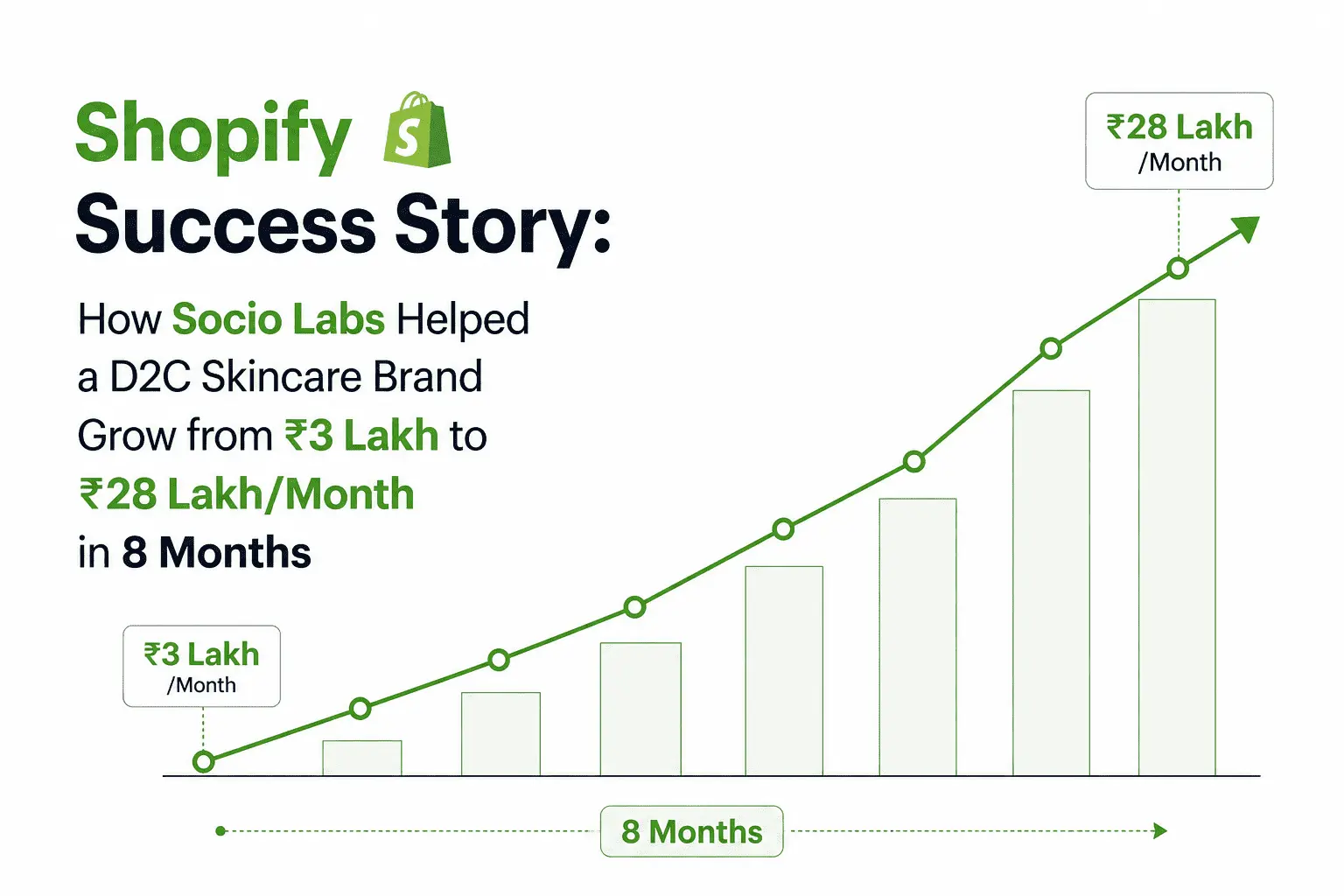
Shopify Success Story: How Socio Labs Helped a D2C…
A Strategic Framework by Socio Labs — India’s Leading…
Imagine spending years perfecting your Google rankings — climbing to page one, earning backlinks, mastering technical SEO — only to watch a new wave of technology quietly sideline everything you built.
That’s not a hypothetical. That’s 2026.
AI-powered platforms like ChatGPT, Google AI Overviews, Perplexity, and Gemini are now answering millions of queries directly — without sending users to your website. According to Gartner, traditional search engine volume is expected to drop by 25% by the end of 2026, as AI chatbots and virtual agents absorb more of the search space. Meanwhile, web sessions from AI referrals have surged by 527% in just one year (Previsible, 2025).
If your brand isn’t being cited in AI-generated answers, it’s increasingly invisible.
This is precisely why Generative Engine Optimization (GEO) — the discipline of structuring your content and digital presence to be cited by AI search engines — has become one of the most critical marketing strategies of our time.
In this guide, you’ll learn exactly what GEO is, how it differs from traditional SEO, the tactics that actually work, and how Socio Labs helps brands future-proof their visibility in an AI-first search world.


Generative Engine Optimization (GEO) is the practice of structuring digital content and online brand presence to improve visibility within AI-generated responses from platforms such as ChatGPT, Google AI Overviews, Perplexity, Gemini, and Claude.
The term was formally coined in 2023 by researchers at Princeton University, Georgia Tech, and IIT Delhi, who published a foundational peer-reviewed paper (ACM KDD 2024) defining GEO as a discipline for helping content creators improve visibility in generative engine responses. By 2026, what began as an academic concept has become a boardroom imperative.
Traditional SEO asks: “How do I rank #1 in Google’s blue links?”
GEO asks: “How do I get cited inside the AI’s generated answer?”
When a user types a question into ChatGPT or triggers a Google AI Overview, the AI doesn’t serve a ranked list of links. It synthesizes information from multiple sources and presents a single, curated response — often without requiring the user to click through anywhere. GEO is the discipline of ensuring your brand is the source being synthesized and cited.
Trusted over 1800+ clients
Understanding the distinction between GEO and traditional SEO is essential before building any strategy. They are not competing approaches—they are complementary layers—but they operate on fundamentally different logic.
Factor | Traditional SEO | Generative Engine Optimization (GEO) |
Goal | Rank in blue-link results | Get cited in AI-generated answers |
Target Platform | Google, Bing, Yahoo | ChatGPT, Perplexity, Gemini, AI Overviews |
Success Metric | Ranking position, organic traffic | AI citation share, brand mentions in AI answers |
Key Signal | Backlinks, domain authority | Content depth, structured data, brand mentions |
Content Format | Keyword-optimized pages | Entity-rich, structured, answer-ready content |
Click Dependency | High (drives website traffic) | Low (zero-click visibility is still valuable) |
Overlap with Top 10 | Core goal | Only 6.82% of ChatGPT results overlap Google’s top 10 |
Authority Signal | Link equity | Entity authority, third-party brand citations |
Important: A site with a solid SEO foundation is more likely to be cited by AI engines, since AI systems often use traditional SEO quality signals as one of many inputs. The optimal 2026 strategy layers SEO + AEO + GEO together.
Rated Best Performance Agency 2019 By Facebook Business Partners
#1 Search Result For Performance Marketing in India
#1 Search Result For Best Digital Marketing Company in India
The data makes a compelling, urgent case for investing in GEO today.
Brands cited in AI answers without generating a traceable click are still influencing perception and driving decisions
AI language models don’t rank content the way Google’s PageRank algorithm does. Instead, they use a different set of signals when deciding whose content to surface in a generated answer.
Pages with more than 20,000 characters receive 4.3x more AI citations than shorter pages (ConvertMate, 2026). Comprehensive, topic-covering content signals authority to AI systems.
Adding verifiable statistics to content is the single most effective GEO tactic, improving AI visibility by up to 41% (Princeton/Georgia Tech/IIT Delhi, KDD 2024). Weak: “Many companies use AI.” Strong: “78% of organizations reported using AI in 2024 (McKinsey).”
Brands are 6.5x more likely to be cited via third-party sources than via their own website alone. Distributing content across publications increases AI citations by up to 325% compared to self-publishing only (ConvertMate, 2026).
FAQ schema, HowTo schema, and structured data help machine-readable answers feed directly into generative models. FAQ schema pages receive disproportionately more AI citations across most verticals.
Optimizing H2/H3 headers as direct questions significantly increases the chance an AI will extract that text as an answer excerpt. For example: “What Is Generative Engine Optimization?” rather than “GEO Overview.”
AI engines map entities — people, companies, products, concepts — and their relationships. Content that clearly defines and demonstrates relationships between entities is more reliably cited. This represents a shift from link-based to entity-based search logic.
AI engines weight recency heavily for time-sensitive queries. Content published in 2024 without updates consistently loses ground to 2026 articles on the same topic. Always include visible timestamps and “as of [date]” temporal markers.
Canonical signals, fast page speed, clean sitemaps, and proper indexing remain essential for being surfaced as source material to AI models using RAG (Retrieval-Augmented Generation) systems.
AI doesn’t do keyword matching — it understands concepts and relationships. Build content that:
Generative engines synthesize and summarize. Structure every major page with:
Since 82% of AI citations come from earned media, invest in:
Prioritize these schema types for GEO:
GEO is not a one-time optimization — it demands ongoing discipline. Create a process to:
Use this framework to build your GEO strategy from the ground up.
Before optimizing, understand your starting point.
Map out the questions your audience is asking generative engines:
For each key page:
Create a 90-day earned media plan:
Use Google’s Rich Results Test to verify existing schema, then expand:
Set up a monthly GEO reporting cadence:
Traditional SEO metrics (rankings, organic CTR) are necessary but no longer sufficient. GEO introduces a new set of KPIs your team needs to track.
KPI | What It Measures | How to Track |
AI Citation Share | % of target queries where your brand is cited by AI | Manual audits, AI tracking tools |
Overview Visibility Rate | How often your content appears in Google AI Overviews | Google Search Console, BrightEdge |
Zero-Click Displacement Rate | Pages losing traffic to AI answers | GSC click vs. impression trends |
AI Referral Sessions | Website visits originating from AI platforms | Google Analytics 4 (source/medium) |
Brand Sentiment in AI | Tone of AI-generated mentions of your brand | AI monitoring tools |
Third-Party Citation Rate | Frequency of brand mentions in external content | Muck Rack, Mention, Brand24 |
Note: The gap between planning and measuring GEO is a key challenge in 2026. Only 23% of teams are actively measuring GEO ROI despite 54% planning investment. Building measurement infrastructure early gives you compounding data advantages.
GEO impact and tactics vary significantly by vertical.
AI Overviews appear frequently for symptom, treatment, and medication queries. Structured medical content with cited clinical sources gets a disproportionate citation share. E-E-A-T (especially experience and expertise signals) is critical here.
Comparison queries ("best credit card for X") and "how to" financial content are heavily AI-mediated. Data-rich content with clear, dated figures performs best. Trust signals (regulatory citations, author credentials) matter more than in other verticals.
90% of B2B buyers use AI during the buying journey—this is the highest-stakes GEO vertical. Technical depth, original research, and benchmark data drive AI citations. Product comparison content and ROI-focused case studies are most cited.
Purchase intent queries are increasingly surfaced through AI assistant flows rather than link clicks. Product pages with benchmark data and pricing comparisons are cited 2.8x more than generic descriptions. Structured product data (schema, reviews, specifications) is essential.
Don’t wait to get noticed.
Call us today and start generating quality leads with high-performing digital marketing strategies that drive growth and ROI.
Even experienced marketers make these errors when transitioning to a GEO-first mindset.
GEO demands sustained content refreshes and ongoing brand-building, not a single optimization sprint. Outdated content consistently loses AI citations to fresher sources.
Focusing only on your own website is insufficient. Since 82% of AI citations come from external sources, on-site optimization alone will have limited impact.
AI engines don't respond to keyword stuffing. Entity clarity and content depth matter far more than keyword repetition.
Content without visible dates is treated as potentially stale by AI retrieval systems. Always include "as of [date]" and update dateModified in your schema.
Scrubbing old stats without updating them creates content gaps. Always replace dated figures with current ones.
AI models may resurface old, inaccurate claims about your products, pricing, or services. Conduct a quarterly content audit to remove or update anything that could create liability if cited inaccurately by an AI.
A growing ecosystem of tools supports GEO strategy and measurement.
The shift from click-based search to AI-synthesized answers is no longer a future scenario — it is the current reality of digital marketing in 2026.
The brands winning in AI search have done something deliberate: they’ve made their content easy for AI to understand, trust, and cite. They’ve published data-rich, structured, regularly updated content. They’ve built brand authority across third-party channels. They’ve implemented schema, created answer-ready formats, and tracked new KPIs that reflect how AI engines operate.
The brands falling behind are those still optimizing for the search landscape of five years ago — focusing only on Google rankings, neglecting earned media, and treating GEO as a speculative future concern.
Here’s what the data tells us clearly:
GEO and SEO together are not optional additions to your marketing stack. They are the foundation of digital visibility in an AI-first world.
A Strategic Framework by Socio Labs — India’s Leading…
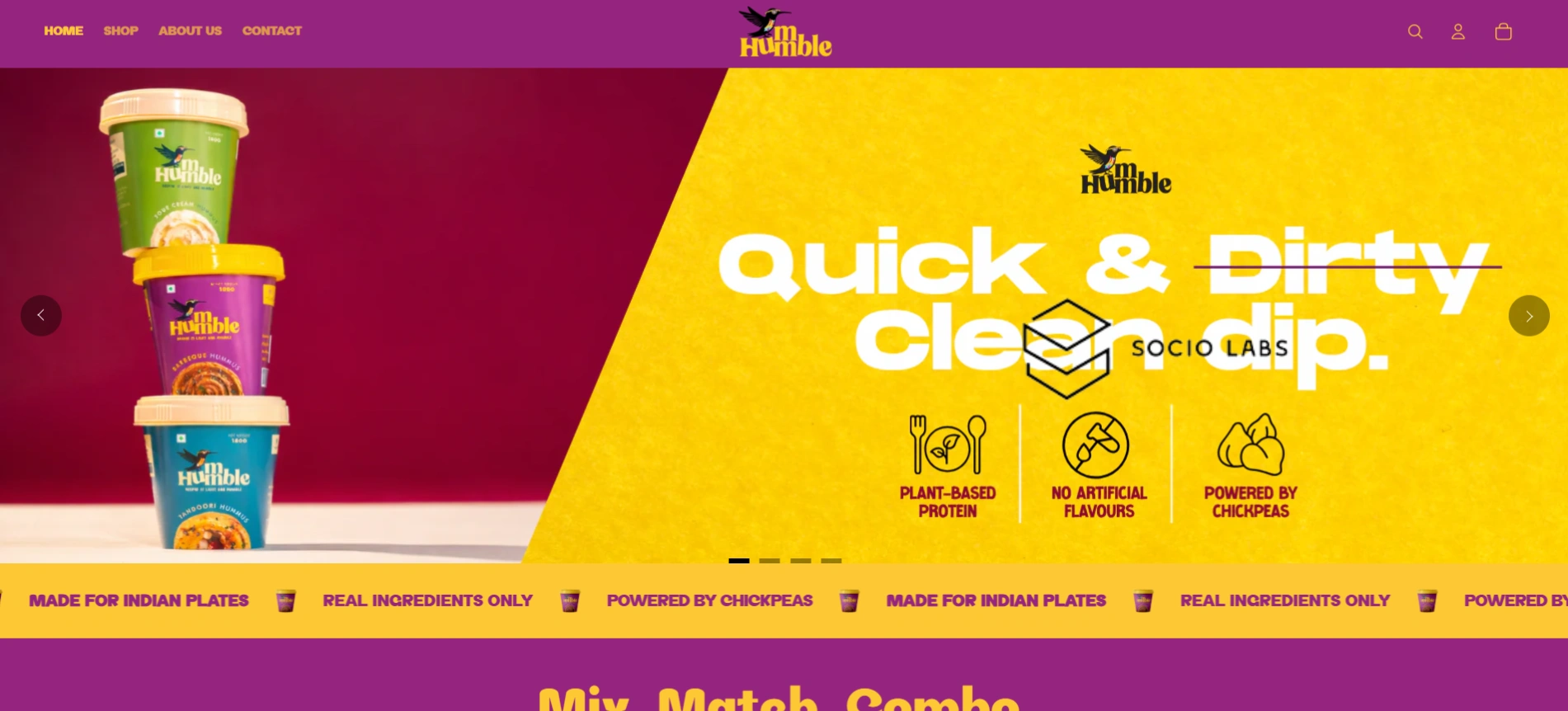
Shopify E-commerce / D2C (Packaged Foods – Hummus &…

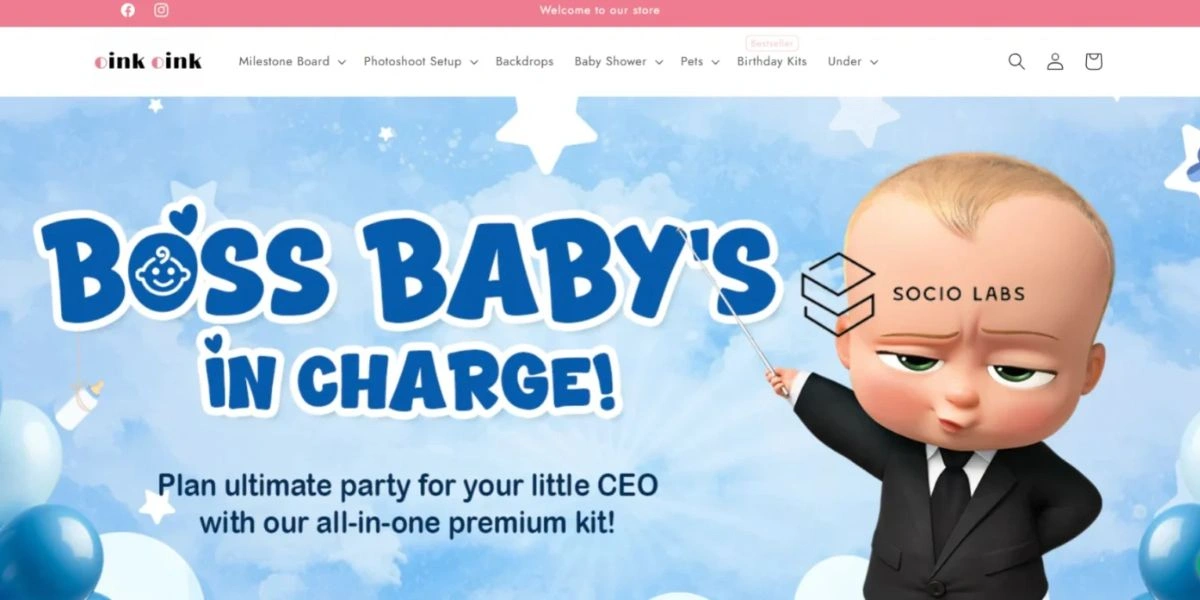
E-commerce / D2C (Kids Party Supplies & Celebration Kits)…
If your content is not being cited by AI engines today, you are already losing visibility to competitors investing in GEO.
Start with a free AI visibility audit. Manually search your top 10 target queries in ChatGPT, Perplexity, and Google AI Overviews, then measure how often your brand appears in AI-generated answers. The results often reveal major visibility gaps — and major growth opportunities.
At Socio Labs, our team audits your current AI citation share, identifies your biggest visibility gaps, and builds a custom GEO roadmap designed to position your brand as a trusted source in AI-generated answers — helping you improve visibility, authority, and lead generation within the first 30 days.
GEO stands for Generative Engine Optimization. It is the practice of optimizing digital content to appear in AI-generated search results from platforms like ChatGPT, Google AI Overviews, Perplexity, and Gemini — as distinct from traditional SEO, which focuses on ranking in organic search results.
No, but they are complementary. Traditional SEO targets Google’s link-based ranking algorithm. GEO targets the reasoning logic of large language models. Sites with strong SEO foundations tend to perform better at GEO, but ranking well in Google does not automatically mean being cited by AI engines — only 6.82% of ChatGPT results overlap with Google’s top 10.
GEO does not replace SEO — it extends it. The optimal 2026 strategy combines traditional SEO, Answer Engine Optimization (AEO), and GEO as complementary layers. Organic search traffic still exists and still matters; GEO ensures you’re also visible in the growing share of queries answered directly by AI.
Manually query ChatGPT, Perplexity, and trigger Google AI Overviews using your target keywords and questions. Specialized tools like Ahrefs Brand Radar, Otterly.ai, and Rankscale can automate this monitoring at scale.
GEO timelines vary. Content structure changes (adding FAQ sections, statistics, clear direct answers) can show impact within weeks as AI models re-crawl and update their retrieval indexes. Third-party brand authority building typically compounds over 3–6 months.