
A premium home decor store in South Extension runs a broad discount campaign to boost traffic. Footfall goes up. So does the number of people asking for a lower price on pieces that were never meant to be discounted. The campaign worked, technically, just for the wrong audience.
This happens often with premium retail. Standard performance marketing playbooks are built around volume, more clicks, more traffic, more conversions, measured as cheaply as possible. Premium retail doesn’t work that way. A smaller number of the right customers, people who value quality and are willing to pay for it, is worth far more than a large number of price-sensitive browsers.
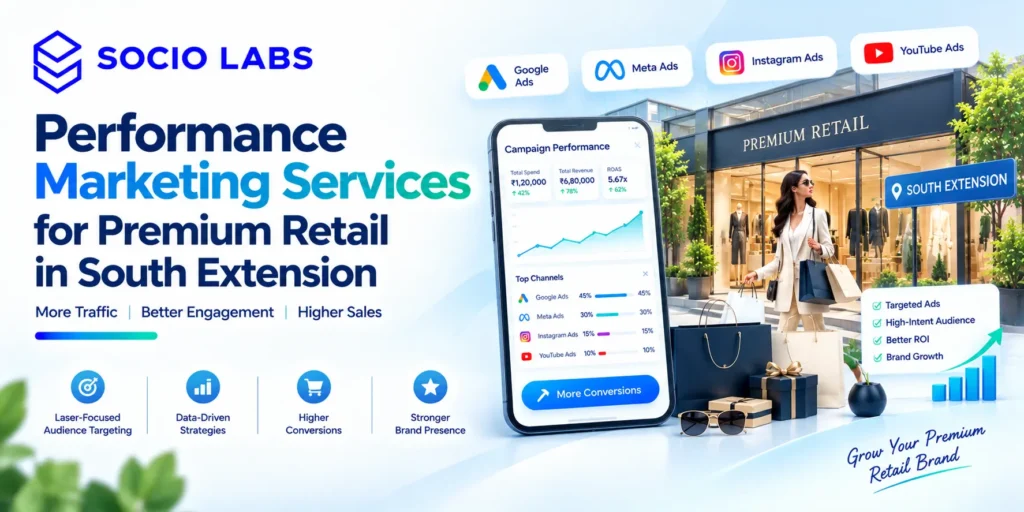
Performance marketing for premium retail means targeting precisely, protecting how the brand is perceived, and measuring success by the quality of who shows up, not just how many people click. Here’s what that looks like for a store in South Extension.
Why Premium Retail Needs a Different Approach
Most performance marketing advice optimises for the lowest cost per click or conversion. For premium retail, chasing the cheapest clicks usually means reaching the least qualified audience, people unlikely to spend at your price point at all.
There’s also a brand perception risk. Heavy discount messaging, flash sale banners and urgency-driven ad copy can work for mass retail, but they can quietly undercut a premium brand’s positioning, training your audience to wait for a deal instead of valuing the product at full price.
What Actually Works for Premium Retail Performance Marketing
Here’s what a campaign built around premium buying behaviour should include.
Target Affluent and Lookalike Audiences Based on Past High-Value Customers
Rather than broad demographic targeting, campaigns should build lookalike audiences from your actual high-value customers, people who’ve already bought at full price, so new audiences resemble buyers who match your real customer profile, not just anyone nearby.
Avoid Discount-Led Messaging That Undercuts Positioning
Ads built around craftsmanship, exclusivity or a specific design story typically protect brand value better than ads leading with “% off.” When a sale genuinely needs promoting, framing it around a specific occasion or limited collection works better than a blanket discount message.
Blend Brand Storytelling With Direct-Response Elements
Purely brand-focused content looks good but rarely drives action on its own. Purely transactional ads can feel cheap for a premium product. The strongest campaigns combine both, strong visual storytelling with a clear, low-pressure next step, like booking a private viewing or requesting more details.
Use Personalised Retargeting and Concierge-Style Follow-Up
Someone who’s engaged with premium content, watched a brand video, viewed a specific collection, deserves a more personal follow-up than a generic “come back” ad. A personalised message or a concierge-style invitation to visit often performs better than standard retargeting creative.
Measure Enquiry Quality, Not Just Enquiry Volume
For premium retail, a smaller number of serious enquiries usually beats a larger number of casual ones. Tracking which campaigns bring in people who actually visit, spend time with staff and convert, rather than just counting form fills, shows you what’s genuinely working.
Use Loyalty and Repeat-Purchase Data to Build Better Lookalikes
Your most valuable customers are often repeat buyers, not first-time ones. Feeding loyalty or CRM data into your ad platforms helps build audiences that reflect your best customers over time, not just your most recent ones.
A Realistic Example
Suppose an affluent customer in South Extension is furnishing a new home and comes across a brand story about a premium furniture piece’s craftsmanship. She doesn’t buy immediately, she saves the post, researches a bit more, and a week later sees a personalised retargeting message inviting her to book a private showroom visit. That invitation, rather than a generic discount banner, is usually what moves a premium buyer from interested to actually visiting.
Common Mistakes Premium Retail Brands Make
Running broad, discount-led campaigns. This attracts volume, but often the wrong kind of customer for a premium price point.
Targeting too widely without income or interest filters. Reaching everyone nearby usually means reaching mostly people who were never going to buy at full price.
Judging campaigns by click volume alone. A campaign with fewer clicks but far more qualified enquiries is often performing better, not worse.
Using generic creative that doesn’t match the brand’s aesthetic. Premium buyers notice when ads feel mismatched to the quality of the actual product.
Not using CRM or loyalty data in targeting. Without this, campaigns keep trying to find new audiences from scratch instead of learning from who already buys.
What Should Be Measured?
For premium retail, it helps to track cost per qualified enquiry rather than cost per click, how many enquiries convert into actual store visits or sales, average order value by campaign, and repeat purchase rate among customers acquired through paid campaigns.
Does Being in South Extension Matter?
Yes. South Extension has an established premium and lifestyle retail presence, with a mostly affluent shopping catchment and several comparable brands nearby. This means precise targeting and protecting brand perception matter more here than in markets with less premium competition, since customers in this area often have several similar options to choose between.
When Professional Help Makes Sense
Building lookalike audiences from real high-value customers, balancing brand storytelling with direct response, and measuring enquiry quality instead of volume takes a different skill set than standard performance marketing. Sociolabs.in works with premium retail brands on exactly this kind of targeting and measurement approach, built around protecting brand value while still generating real, qualified demand.
conclusion
If your campaigns are generating traffic but not the right kind of customer, the fix usually isn’t more discounting. It’s building targeting and messaging around who your best customers actually are. Sociolabs.in can review your current campaigns and show you where that gap is.
FAQs
Premium retail needs precise, affluent audience targeting and brand-conscious messaging, since chasing the cheapest clicks usually brings in customers who were never likely to buy at a premium price point.
They often drive more traffic, but for a premium brand, heavy discounting can train customers to wait for deals and attract people unwilling to pay full price, which hurts long-term brand value.
This depends on your average order value, how established your customer data already is, and how competitive your specific category and area are. There's no fixed number that fits every premium brand.
Building accurate lookalike audiences from real high-value customers usually takes a few months of data, so early results are often slower but more sustainable than chasing fast, low-quality traffic.
Yes, feeding this data into ad platforms helps build audiences that resemble your actual best customers, rather than relying only on broad demographic guesses.