
A supplier in Okhla has a catalogue of 150 products and a modest ad budget. The plan is to “promote everything.” Three months later, the money is spread so thin that no product has enough results to learn from.
This is a common way to waste a marketing budget. Good performance marketing services for B2B suppliers start by choosing where to focus. This blog explains what the service includes, how the first three months can look, and what to track.
What Are Performance Marketing Services for B2B Suppliers?
Performance marketing means you pay for campaigns and judge them by results, such as quote requests, sample requests and orders. Clicks and views matter less.
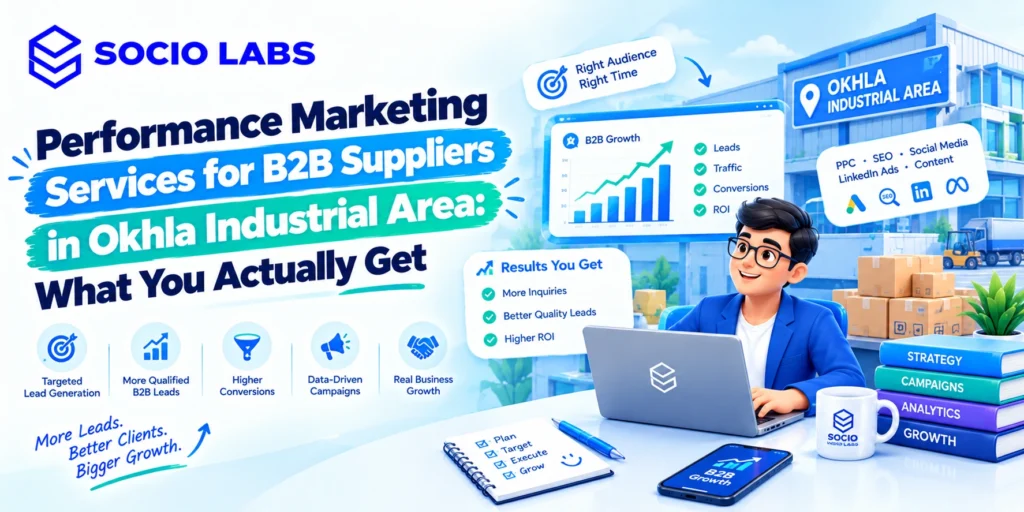
For a B2B supplier, the service usually covers six things:
- Choosing which products to promote first.
- Setting up tracking so every enquiry can be traced.
- Running paid campaigns on channels where your buyers are.
- Building landing pages for each product line.
- Helping with lead follow-up and filtering.
- Reporting on business results, such as quotes and orders.
No service can guarantee orders. B2B sales depend on your price, quality and follow-up too. What the service can do is bring you more of the right conversations, and show you where the rest are being lost.
Why B2B SuppliersWhy B2B Performance Marketing Is Different From Consumer Ads
A consumer might buy after one ad. A B2B buyer rarely does. A purchase manager compares suppliers, asks for samples, checks with a boss and then decides. That can take weeks.
This changes how campaigns should be judged. A lead that arrives today may become an order three months later. So the service must track leads over time, not just count them in the first week.
Order size matters too. One good buyer can be worth more than fifty small enquiries. Campaigns should be built to find that one buyer.
What Performance Marketing Services for B2B Suppliers Include
Choose a few products to start with
Start with the products that earn the best margin, have repeat buyers and that you can supply at volume. Two or three product lines are enough for the first phase.
Each line then gets enough budget to produce real data. Weak products can wait.
Set up tracking before spending on ads
Tracking means recording where each call, form and message comes from. Without it, you cannot tell which ads work.
Set up call tracking, form tracking and WhatsApp click tracking first. Many suppliers skip this step and regret it later.
Run Google Search Ads for buyers who are already looking
Google Search Ads show your business when someone searches for something like “stainless steel fabricator” or “custom packaging supplier.” These buyers have a need now.
The work is mostly about control. Target buying terms and block the wrong ones. Words like “free,” “DIY” or “second hand” may attract people who will never place a real order. Blocking them is called adding negative keywords.
Use LinkedIn Ads when you need to reach a specific job role
LinkedIn lets you target by job title, industry and company size. It suits suppliers who sell to purchase heads, plant managers or owners.
It costs more per click than Google, so it works best when each order is large. It is also better for building awareness than for quick leads.
Build a landing page for each product line
A landing page is the page a person sees after clicking an ad. For B2B, it should show what you make, which industries you serve, your minimum order size and a short quote form.
Ask for the product, quantity and company name in the form. You may get fewer leads, but they will be more serious.
Add remarketing for buyers who visit but do not enquire
Remarketing means showing ads to people who already visited your website. B2B buyers often visit several times before asking for a quote, so a reminder with your catalogue or a sample offer can bring them back.
Set up lead follow-up and a simple CRM
A CRM is a tool that records each lead and what happens to it. A well-kept spreadsheet works to begin with.
The service should also help set rules for follow-up. For example, call every new quote request within a few hours. Many B2B buyers prefer WhatsApp or a quick call, so reply on the channel they used.
Report on quotes and orders, not just clicks
Reports should show which campaigns produced quote requests and which of those became orders. If a report shows only clicks and impressions, ask for more.
A Realistic First 90 Days
Every business is different, but a first quarter often looks like this.
Month 1: Set up. Pick the first product lines. Define what a good lead is, such as minimum order size and target industries. Install tracking. Build landing pages. Launch small Google Search campaigns.
Month 2: Learn and filter. Review which search terms brought real buyers. Add negative keywords. Adjust forms and pages. Check how fast your team replies. Add remarketing.
Month 3: Improve and decide. Move budget to what works. Test LinkedIn only if your buyer roles and order values justify it. Review lead to quote and quote to order rates.
After 90 days you should know which products and searches bring buyers. You may not have full order results yet, since B2B sales cycles are longer. But you should have clear signs.
Example: Focusing on Three Products
This is a hypothetical example, not a real client case.
Suppose an Okhla supplier of industrial fasteners lists 150 items. Instead of promoting all of them, the team picks three product lines with the best margins and repeat orders.
Each gets its own landing page showing sizes, materials, minimum order and a quote form. Google Search campaigns target buying searches for those items only. Calls and forms are tracked.
After two months, the team sees that one product line brings quote requests from a particular industry. Another brings mostly price checks. Budget moves to the first.
The supplier did not need more leads. It needed to see which leads were worth chasing
Common Mistakes B2B Suppliers Make
Promoting the whole catalogue at once. Budget gets spread thin. Start with a few products.
Starting ads before tracking works. You end up with no way to know what produced orders.
Not defining a good lead. If the service does not know your minimum order, target industries and regions, it will optimise for cheap enquiries.
Slow follow-up. Ads bring enquiries. Your team has to turn them into quotes. A lead that waits three days often goes to another supplier.
Judging results too soon. B2B decisions take time. Look at several months of data, not one week.
What Should a B2B Supplier Measure?
Clicks and impressions are only a starting point. These numbers matter more:
- Cost per lead (CPL): how much you pay, on average, for each enquiry.
- Cost per qualified lead: the same, but only for enquiries that fit your product, quantity and region.
- Quote requests (RFQs): buyers asking for a price on a specific need.
- Sample requests and factory visit requests: strong signs of real interest.
- Lead-to-quote and quote-to-order rate: the share that moves forward at each step.
- Cost per order: marketing spend divided by orders won.
Ask for these every month, explained in plain words.
Does Okhla Industrial Area Change the Approach?
A little. Your buyers are rarely in Okhla, so campaigns should target by product, industry and buyer role, across India or in selected regions and export markets. Do not limit ads to South Delhi.
Location still helps in a few ways. Okhla is known as a supplier cluster, so buyers who want to visit factories or compare nearby suppliers may search locally. A correct Google Business Profile with your address, photos and phone number adds trust. Use “Okhla” on your contact page and profile, and not on every page.
What Affects the Cost of These Services?
There is no standard price. Cost usually depends on:
- how many product lines you promote
- which channels you use
- how many landing pages must be built
- how much tracking and reporting you need
- how competitive your product category is
Your ad budget is normally separate from the service fee. Ask who pays the ad platforms and make sure you own the ad accounts and data.
When It Makes Sense to Get Professional Help
You can run a small Google Ads test yourself. Outside help makes sense when:
- sales says most enquiries are not useful
- you use several channels and cannot compare them
- nobody has time to test ads and pages every week
- you cannot tell which leads became orders
- you want to enter new regions or export markets
Look for a team that asks about your products, your ideal buyer and your minimum order before it talks about ads. It should also plan to track leads through to orders and avoid guaranteeing results.
Conclusion
If you have a long catalogue and a small budget, do not try to promote everything. Pick two or three products, set up tracking and see which searches bring real quote requests.
If you want help deciding where to begin, our team can review your products, website and enquiry process, and suggest a focused starting plan.
FAQs
Performance marketing services for B2B suppliers include paid campaigns, landing pages, tracking and reporting, all aimed at quote requests and orders. The work focuses on lead quality, not just clicks. Good services also help connect your leads to sales follow-up.
Google Search Ads usually come first, because buyers search for products by name. LinkedIn Ads help when you need to reach specific job roles. Remarketing and WhatsApp follow-up support both. The best mix depends on your product, buyer and order size.
There is no fixed price. Cost depends on the number of products, channels, landing pages, competition and reporting. Ad spend is usually separate from the service fee. Ask for a written scope and compare the work included, not just the fee.
You may see enquiries within weeks, but order results usually take a few months. B2B buyers compare suppliers before deciding. Judge results using qualified leads, quote requests and orders over a longer period.
It can be, if you start small. Begin with one or two product lines and one channel, such as Google Search Ads. Track which leads become orders, then increase spend only where results are clear.