
A D2C founder opens the ad dashboard and sees a return on ad spend of 4. It looks great. Then the accountant shows the real numbers. After discounts, returns, shipping and product cost, the brand made almost nothing.
Ads can look healthy while the business does not. That is the gap good performance marketing services for D2C brands should close. This blog explains what the service includes, what to track and how to tell if it is working.
What Do Performance Marketing Services Do for a D2C Brand?
Performance marketing means you pay for ads and judge them by results, such as orders and revenue, not by views or likes.
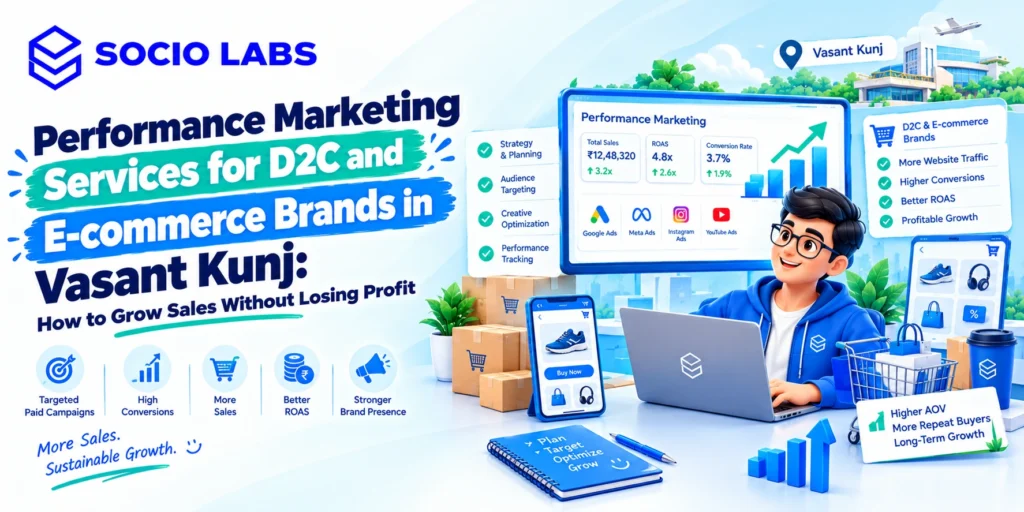
For a D2C or e-commerce brand, the service usually covers:
- Tracking. Making sure orders are linked to the right ads.
- Paid campaigns. Running ads on Meta (Facebook and Instagram) and Google.
- Creative testing. Trying different videos, images and offers to see what sells.
- Store improvement. Fixing product pages and checkout so more visitors buy.
- Retention. Bringing buyers back through WhatsApp, email and offers.
- Profit reporting. Showing what each order really earns.
Nobody can guarantee sales or a fixed return. Results depend on your product, price, reviews and delivery too. A good service finds what works and stops money from leaking.
Why D2C Ads Look Profitable but Often Are Not
Return on ad spend (ROAS) tells you how much revenue you earn for each rupee spent on ads. A ROAS of 4 means Rs 4 in sales for every Rs 1 spent.
The problem is that ROAS counts revenue, not profit. It does not remove product cost, shipping, discounts, payment fees or returns.
In India, cash on delivery (COD) adds another risk. Some COD orders are refused at the door and come back to you. This is called return to origin (RTO). You pay for the ad, the shipping and the return trip, and get no sale.
So a campaign can show strong ROAS and still lose money. Good services track profit, not only revenue.
What Performance Marketing Services for D2C Brands Include
Set up tracking before scaling spend
Tracking means recording where each order came from. Ad platforms and your store often show different numbers, which causes confusion.
A good setup connects your store, ad accounts and analytics. It also separates prepaid orders from COD, and delivered orders from returned ones. Without this, you are guessing.
Run Meta Ads to find new customers
Meta Ads (Facebook and Instagram) are often the main way D2C brands find new buyers. People see your product while scrolling, even though they were not searching for it.
The work is mostly about creative and audience testing. The service should test a few different ads at a time, keep the winners and stop the losers. Do not change everything every day. Ads need time to show results.
Run Google Ads for people ready to buy
Google Search Ads show your product when someone searches for it, such as “cotton kurta set online.” Google Shopping Ads show product photos and prices in search results.
These shoppers are closer to buying than people scrolling social media. Many brands use both: Meta to create interest and Google to catch demand.
Improve product pages and checkout
A landing page is the page someone sees after clicking an ad. For D2C, this is often a product page.
If the page is slow, has weak photos or hides delivery time, people leave. Good services review this too. Look at photos, reviews, size guides, delivery details and return policy. Check that checkout works well on mobile, where most shoppers browse.
Conversion rate is the share of visitors who buy. If 100 people visit and 2 buy, the rate is 2%. Even a small rise can lower your ad cost per order.
Bring buyers back with WhatsApp and email
Winning a new customer is costly. Winning a second order is cheaper. Retention means bringing past buyers back with reminders, new launches and offers.
WhatsApp and email suit this well. Get permission before messaging, and keep messages useful. Too many offers can annoy customers and train them to wait for discounts.
Report on profit, not only revenue
Reports should show orders, customer acquisition cost, repeat purchases and contribution margin. Contribution margin is what is left from each order after product cost, shipping, discounts, payment fees and ad cost. If a report shows only clicks and ROAS, ask for more.
Example: Two Brands, Same Ad Budget
This is a hypothetical example, not a real client case.
Suppose two Delhi skincare brands spend the same on Meta Ads.
Brand A offers a big discount to everyone and ships mostly COD. ROAS looks strong. But many orders are refused, and the discount leaves a thin margin. By month end, there is little profit.
Brand B tests several ads, offers a smaller discount and nudges buyers toward prepaid orders with a small benefit. It sends a WhatsApp message after delivery asking for a review and suggesting a refill. ROAS looks lower. But fewer orders are returned, and more buyers come back.
Brand B has the healthier business. Its ROAS was lower, but its profit was higher.
Common Mistakes D2C Brands Make With Performance Marketing
Judging success by ROAS alone. It ignores returns, discounts and shipping. Look at contribution margin too.
Scaling spend before tracking works. If you cannot trust the numbers, higher spend only makes the confusion bigger.
Using the same ad for months. Ads wear out. People stop noticing them, and costs rise. You need a steady supply of new creative.
Ignoring the product page. Great ads that lead to a weak page waste money.
Giving heavy discounts to everyone. This can bring buyers who never return at full price.
Not planning for COD returns. Orders refused at delivery are paid-for ads with no revenue.
What Should a D2C Brand Measure?
Clicks and likes are not enough. These numbers show whether marketing is helping the business:
- Customer acquisition cost (CAC): how much you spend, on average, to win one new customer.
- ROAS: revenue earned for each rupee spent on ads.
- Conversion rate: the share of visitors who buy.
- Average order value (AOV): the average amount per order.
- Return and RTO rate: the share of orders returned or refused.
- Repeat purchase rate: the share of customers who buy again.
- Contribution margin: the profit left after the main costs of each order.
Ask for these every month, in plain words. The most useful comparison is CAC against what a customer is worth over time.
Does Vasant Kunj Change the Strategy?
Not much for most online brands.
Your customers are likely in many cities, so campaigns should target by product, interest and region across India, not just South Delhi. Being based in Vasant Kunj mainly helps with team access and meetings with your service provider.
Location can matter in a few cases. If you offer same-day delivery in Delhi, run a store or showroom, or sell products people want to see before buying, local targeting and a correct Google Business Profile make sense. Use local campaigns only for those goals.
What Affects the Cost of Performance Marketing Services?
There is no standard price. The cost usually depends on:
- how many products and categories you promote
- which channels you use
- how many ads and videos need to be made
- how much store and checkout work is needed
- how much tracking and reporting you want
- how competitive your category is
Your ad budget is normally separate from the service fee. Ask who pays the ad platforms, and make sure you own the ad accounts, pixel and customer data.
When Professional Help Makes Sense
Many founders run the first ads themselves. Outside help makes sense when:
- sales rise but profit does not
- you cannot tell which ads bring buyers
- ad costs keep going up
- you run several channels and cannot compare them
- you do not have time to test new ads every week
Look for a team that asks about your margins, return rate and repeat customers before it talks about ads. It should plan to report on profit and avoid guaranteeing results.
Conclusion
If your ads show good ROAS but your bank balance does not match, do not start by raising the budget. First check your returns, discounts, tracking and product pages.
If you would like a second opinion, our team can review your ad accounts, store and reports, and show you where profit is leaking.
FAQs
Performance marketing services for D2C brands cover paid ads, tracking, creative testing, store improvement and reporting, all aimed at orders and profit. Good services also help with repeat buyers. The focus is on results you can measure, not likes or views.
Neither is better for everyone. Meta Ads help you find new customers who were not searching. Google Ads catch people already looking to buy. Many brands use both, starting with the one that fits their product and budget best.
It depends on your margins, so there is no single number. A product with a high margin can work with a lower ROAS. A low-margin product needs more. Work out your break-even ROAS using product cost, shipping, fees and returns.
There is no fixed price. Cost depends on products, channels, creative needs, store work and reporting. Ad spend is usually separate from the service fee. Ask for a written scope and compare the work included, not just the fee.
You may see early signals within weeks. A clearer picture usually takes a few months, because ads need testing and stores need fixing. Judge results by CAC, profit and repeat orders, not one week of sales.