
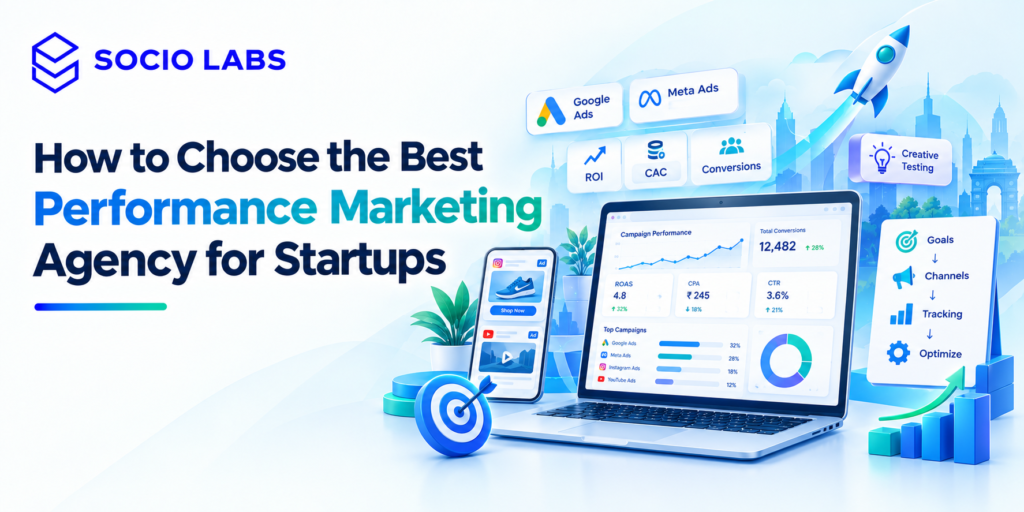
Every startup founder eventually hits the same wall: a limited budget, a board or investor expecting visible growth, and a marketing function that still needs to be built from scratch. Choosing the right performance marketing agency for startups is one of the highest-leverage decisions you’ll make in this phase, because a wrong hire doesn’t just waste money it burns runway and time you may not get back. This guide walks through exactly how to evaluate, compare, and select an agency that fits your stage, budget, and goals, without relying on guesswork or sales pitches.
What Is a Performance Marketing Agency for Startups?
A performance marketing agency for startups is a specialized marketing partner that runs paid and measurable growth campaigns typically across platforms like Google Ads, Meta Ads, LinkedIn Ads, and programmatic or app-install networks with the goal of driving trackable actions such as sign-ups, leads, app installs, or sales.
Unlike traditional branding agencies, performance marketing agencies are built around data, attribution, and continuous optimization. They work with measurable budgets, test creatives and audiences, and adjust spend based on what’s actually converting rather than relying purely on brand awareness metrics.
Example (hypothetical): A seed-stage SaaS startup with a ₹3 lakh monthly marketing budget hires an agency to run Google Search Ads and LinkedIn lead-gen campaigns, with the primary goal of generating qualified demo bookings rather than just website traffic.
For early-stage companies, this distinction matters because every rupee spent needs to be justified against a business outcome, not just impressions or reach.
Why Should Startups Consider Performance Marketing?
Startups typically turn to performance marketing because it offers faster feedback loops and clearer accountability than most other marketing approaches.
Early-stage companies often don’t have the internal bandwidth, platform expertise, or testing infrastructure to run paid campaigns efficiently on their own. An experienced agency brings:
– Platform-specific expertise (Google, Meta, LinkedIn, programmatic)
– Access to testing frameworks and creative iteration processes
– Attribution and analytics setup experience
– The ability to scale or pause spend quickly based on performance
That said, performance marketing isn’t a guaranteed growth switch. It works best when a startup already has basic product-market fit signals, a functioning website or app, and a clear understanding of its target customer. Hiring an agency too early before there’s anything to validate often leads to wasted spend regardless of how skilled the agency is.
What Services Should Startups Expect From an Agency?
A credible performance marketing agency should offer a defined, documented scope of services rather than vague “full-service marketing” promises.
Typical services include:
– Paid media management Google Ads, Meta Ads, LinkedIn Ads, YouTube, programmatic
– Conversion tracking and attribution setup pixel/tag implementation, server-side tracking, CRM integration
– Landing page and funnel optimization working with design/dev teams or recommending changes
– Creative strategy and testing ad copy, creatives, A/B testing frameworks
– Analytics and reporting dashboards campaign-level and business-level performance visibility
– Audience and market research identifying target segments and messaging angles
Not every agency will offer every service in-house. Some partner with design or development vendors for landing pages. Ask explicitly what’s included versus what’s billed separately before signing anything.
How Do You Choose the Right Performance Marketing Agency?
The right agency is the one whose experience, team structure, and reporting style match your startup’s stage, budget, and growth goals not necessarily the biggest or most well-known name.
Start by defining what you actually need: Is it demand generation, app install growth, lead generation for B2B sales, or e-commerce conversions? Agencies often specialize, and an agency strong in D2C e-commerce performance marketing may not be the best fit for a B2B SaaS lead-gen motion.
Example (hypothetical): Two agencies pitch a fintech startup. Agency A has deep experience in e-commerce ROAS campaigns. Agency B has prior experience with regulated fintech products and understands compliance-related ad restrictions. For this startup, Agency B’s relevant category experience may outweigh Agency A’s broader portfolio size.
Evaluate agencies on relevant experience first, communication style second, and pricing third in that order. Startups that reverse this order and prioritize price often end up switching agencies within a few months.
What Should Startups Check Before Hiring an Agency?
Before hiring, verify the agency’s actual working process, not just their pitch deck.
Key things to check:
– Industry or category experience have they worked with startups at a similar stage or in a similar business model?
– Team structure will you work with senior strategists or get handed off to junior executors after signing?
– Tools and tech stack what analytics, tracking, and reporting tools do they use?
– Client retention patterns are they willing to discuss why past clients may have left (if asked directly)?
– Communication cadence weekly calls, async updates, or only monthly reports?
Ask to speak directly with the person who would manage your account day-to-day, not just the sales or business development team.
How Should Startups Compare Agency Pricing and Contracts?
Performance marketing agencies generally price their services using one of a few common models, and understanding these models matters more than comparing flat numbers.
| Pricing Model | How It Works | Best Suited For |
|---|---|---|
| Flat Monthly Retainer | A fixed monthly fee is charged for campaign management, usually separate from the advertising spend. | Startups that want predictable monthly costs |
| Percentage of Ad Spend | The agency charges a percentage of the monthly advertising or media budget. | Startups with larger and scalable ad budgets |
| Performance / Hybrid Model | A base management fee is combined with a performance-based bonus linked to agreed KPIs. | Startups looking for shared accountability |
| Project-Based Pricing | A fixed fee is charged for a clearly defined scope of work over a specific period. | One-time campaigns, product launches, or short-term projects |
There is no universally “correct” pricing model the right one depends on your budget size, predictability needs, and how clearly KPIs can be defined upfront. Avoid agencies that are vague about what’s included in the retainer versus billed as an add-on, and always clarify minimum contract duration, termination notice period, and ad account ownership (you should own your own ad accounts, not the agency).
What Questions Should You Ask a Performance Marketing Agency?
Asking the right questions upfront reveals more about an agency’s competence than any pitch deck.
Which platforms and industries have you worked in most recently? Who exactly will manage our account, and what’s their experience level? How do you define and track success for a startup at our stage? What does your reporting look like, and how often will we receive it? How do you handle underperforming campaigns? Do we retain full ownership of our ad accounts and data? What’s your average client tenure, and why do clients typically leave? What’s explicitly included in the monthly fee, and what’s billed extra?
An agency that answers these clearly and specifically rather than with generic marketing language is generally a stronger long-term partner.
What Red Flags Should Startups Avoid?
The clearest red flag is any agency that guarantees specific results leads, sales, ROI percentages, or rankings before even auditing your business.
Other warning signs include reluctance to share a clear reporting structure or sample dashboard; vague answers about who will actually manage your account; pressure to sign long-term contracts before a trial or pilot period; no clear explanation of tracking, attribution, or data ownership; pricing that seems unusually low with no explanation of what’s excluded; and case studies presented without context on budget, timeline, or industry.
Legitimate agencies are generally comfortable being transparent about limitations, timelines, and realistic expectations not just upside potential.
How Can Startups Measure Agency Performance?
Agency performance should be measured against pre-agreed KPIs tied to business outcomes, reviewed on a consistent schedule not against vanity metrics like impressions or reach alone.
Depending on your business model, relevant KPIs might include cost per lead, cost per acquisition, conversion rate, or return on ad spend defined jointly with the agency before campaigns launch, since “good” performance varies significantly by industry and funnel stage.
Set a review cadence, commonly 30/60/90-day checkpoints, where you jointly assess whether campaigns are trending toward agreed KPIs, what’s been tested, and what’s changing next. If an agency resists structured, periodic performance reviews, that itself is worth noting.
Common Mistakes Startups Make When Hiring an Agency
Choosing an agency only because of low pricing, without checking relevant experience. Focusing on vanity metrics like impressions instead of business outcomes. Not defining KPIs before campaigns start. Ignoring tracking and attribution setup, leading to unreliable reporting later. Hiring without checking industry or category experience. Accepting guaranteed ROI or guaranteed-lead claims at face value. Not reviewing the reporting process before signing. Signing unclear or overly long contracts without an exit clause. Approving a strategy without understanding it. Ignoring early communication or transparency issues, assuming they’ll improve later.
Conclusion
Choosing the right performance marketing agency for startups isn’t about finding the cheapest option or the biggest name it’s about finding a partner whose experience, reporting process, and communication style match your stage and goals. Define your KPIs, ask direct questions, watch for red flags like guaranteed-result promises, and start with a trial period before any long-term commitment.
Thinking through which growth partner fits your startup’s stage? Compare the leading performance marketing agencies in India from SocioLabs and see how a structured evaluation process applies to your specific goals.
FAQs
It's a marketing partner that manages paid, trackable campaigns such as Google, Meta, or LinkedIn ads focused on measurable outcomes like leads, sign-ups, or sales, rather than broad brand awareness alone.
It can be, but it works best once there's basic product-market fit and a functioning website or app to send traffic to. Running paid campaigns before validating the product often leads to wasted spend.
There's no fixed figure budgets depend on industry, customer acquisition cost expectations, and growth goals. Define your goals first and let the agency recommend a realistic test budget.
Evaluate relevant category experience, who will manage your account, their reporting process, tracking setup capability, and transparency during the sales conversation not just their portfolio.
Typically paid media management, conversion tracking setup, creative testing, landing page guidance, and regular performance reporting. Confirm what's included versus billed separately beforehand.