
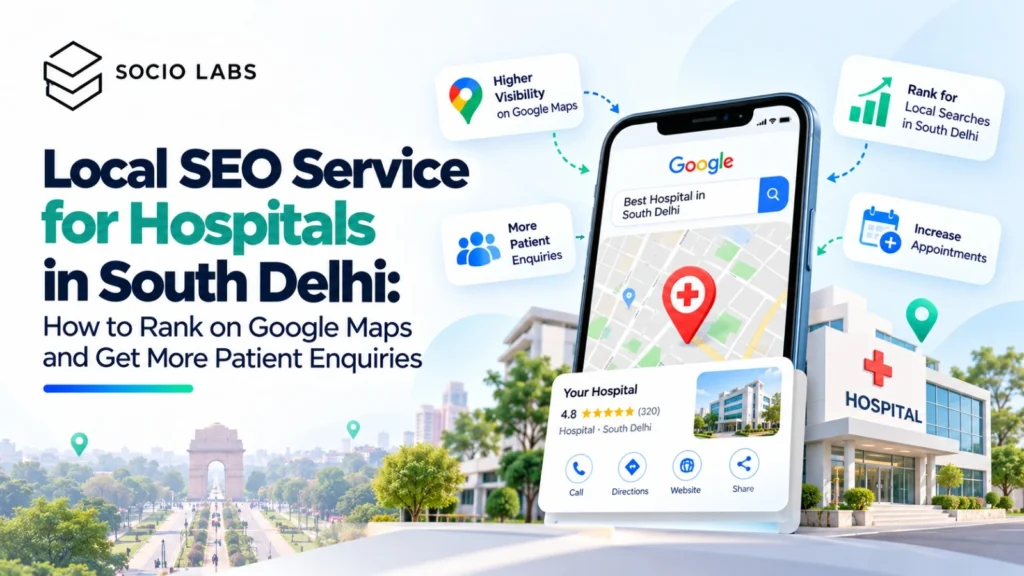
Someone’s father has chest pain at 11 pm. A family member grabs a phone and searches “hospital near me.” They tap the first result that shows a phone number, a map pin and the words “open 24 hours.”
If your hospital is not in those first results, you will never know that family looked. This is why local SEO for hospitals in South Delhi matters. It decides who patients see first when they need care nearby. This blog explains how to rank, what to fix first and which numbers to track.
How Does a Hospital Rank in Local Search?
Google uses three main things to decide local results: relevance, distance and prominence. Relevance means how well your listing matches the search. Distance means how close you are to the person searching. Prominence means how well known and trusted you are, based on reviews, mentions and your website.
You cannot change distance. You can improve the other two. To do that, hospitals should:
- Complete and correct their Google Business Profile.
- Keep hospital details the same on every website and listing.
- Build a clear page for each department and treatment.
- Collect honest patient reviews and reply to them.
- Make it easy to call, get directions or book.
No one can guarantee a number one spot. But these steps remove the most common reasons hospitals lose to smaller rivals.
Why Hospitals Lose Local Searches They Should Win
A large hospital with good doctors can still look weak online. This usually happens for simple reasons.
The Google listing shows old timings. The emergency number is missing. The website has one “Services” page instead of pages for each department. Reviews sit unanswered. A smaller clinic with a clean, active profile then gets the call.
Hospitals also have a harder job than a single clinic. You have many departments, many doctors and different timings for each. Every one of these is a chance for information to go out of date.
How Local SEO for Hospitals in South Delhi Works
Local SEO means improving how your hospital appears when people search for care in a particular area. It affects three places:
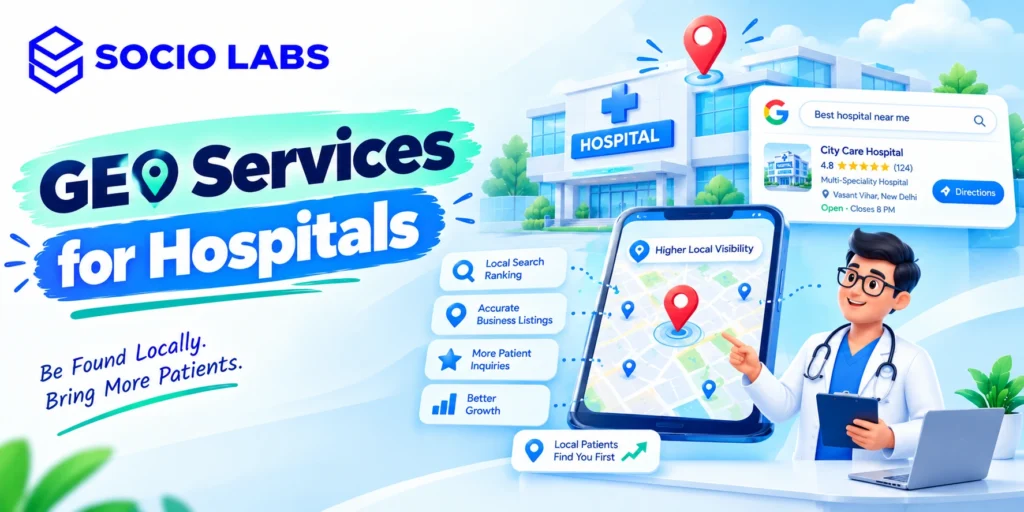
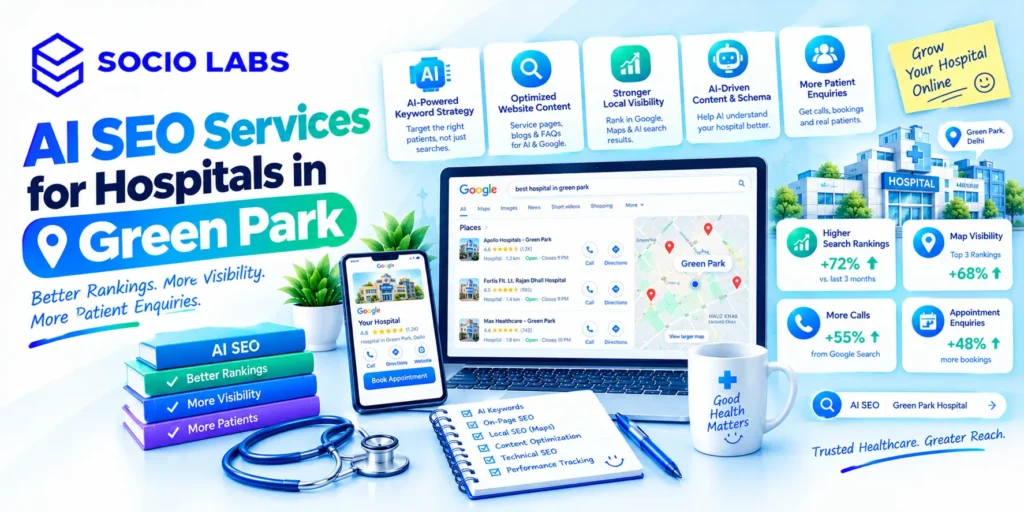
- Google Maps and the local pack. The local pack is the short list of three places with a map that appears for searches like “hospital near me.”
- Normal Google results. Your website pages for treatments and departments.
- Health directories and listings. Sites where patients check doctors, timings and reviews.
When these three agree with each other and look trustworthy, Google has more confidence in showing you.
A Practical Plan to Rank Your Hospital Locally
Set up your Google Business Profile properly
Your Google Business Profile is the free listing that shows on Google Search and Maps. For a hospital, this is often the first thing a patient sees.
Check these basics:
- Choose the right main category, such as hospital, and add extra categories only where they truly apply.
- Add 24-hour emergency timing clearly if you offer it.
- Add your main phone number, emergency number and website.
- Upload real photos of the building, entrance, reception and parking.
- List your key services and departments.
- Mark insurance and accessibility details where Google gives you the option.
Check the profile every month. Old timings are one of the most common problems.
Keep your hospital details the same everywhere
Your hospital name, address and phone number should match across your website, Google profile and healthcare directories. SEO people call this NAP, short for name, address, phone.
Small differences confuse search engines. “Road” on one site and “Marg” on another is a small example. Different phone numbers across listings is a bigger one. Make a master document with the correct details and use it for every listing.
Build a page for each department and treatment
Patients search for one need at a time, like “knee replacement hospital” or “maternity hospital near me.” Each major department or treatment should have its own page.
A good page explains who the treatment is for, what happens during the first visit, which doctors are available and whether insurance is accepted. Add OPD timings and a clear call button. Write in simple words, as a doctor would explain it to a patient.
Show doctor details patients can trust
Health is a sensitive subject, so trust signals matter. Each doctor profile should show qualifications, registration details, areas of experience and OPD days.
Medical content should be reviewed by a qualified doctor, with the reviewer’s name and date shown. Do not promise treatment results.
Collect and answer reviews
Reviews are a big part of prominence. Ask patients for feedback after discharge or an OPD visit, in a polite way. Do not offer gifts or discounts for reviews, and do not write fake ones.
Reply to every review. Thank patients for positive feedback. For complaints, reply calmly and invite them to contact the hospital. Never share any patient’s medical details in a public reply.
Make contacting you easy
On mobile, add tap-to-call buttons, a WhatsApp option and a link to directions. Keep any appointment form short: name, phone number, department and preferred time. Put the emergency number where it cannot be missed.
If you offer WhatsApp, someone must answer it every day.
Example: How One Patient Might Choose a Hospital
This is a hypothetical example, not a real client case.
Suppose a woman in South Delhi is looking for a maternity hospital for her sister. She searches on her phone. Two hospitals appear on the map.
Hospital A has a profile with recent photos, clear timings, many reviews with replies and a button to call. Its website has a maternity page with doctor names, package information and visiting hours. Hospital B has old photos, no replies to reviews and a website page that just says “Maternity services available.”
She calls Hospital A. Both may offer good care. Only one made it easy to feel sure.
Common Local SEO Mistakes Hospitals Make
Using one profile for everything. A single profile cannot explain every department. Build strong department pages on your website, and check Google’s guidelines before creating any extra profiles for doctors or departments.
Outdated emergency and OPD details. Wrong timings send patients to other hospitals. In healthcare, wrong information can also put patients at risk.
Ignoring negative reviews. Silence looks careless. A calm, respectful reply shows future patients how you treat people.
Buying fake reviews or bulk listings. Shortcuts like these can get your profile penalised. Build reviews slowly and honestly.
Posting medical content with no doctor review. Inaccurate pages hurt trust and can hurt your rankings over time.
What Should a Hospital Measure?
Rankings and traffic are not enough. These numbers show whether local SEO is bringing patients:
- Calls from Google Maps: how many people tap call on your profile.
- Direction requests: a good sign that patients plan to visit.
- Website calls and WhatsApp messages: the actions people take on your pages.
- Enquiries by department: which services patients ask about most.
- Conversion rate: the share of visitors who contact you. If 200 people visit a page and 10 enquire, the rate is 5%.
- Booked appointments and admissions enquiries: how many enquiries become real visits.
Track call sources properly. A call tracking number or a simple “how did you find us?” question at the front desk can help.
Does South Delhi Change the Strategy?
Yes, in a few ways.
South Delhi covers many neighbourhoods, and patients often have several hospitals within reach. People also search using area names, so your address, map pin and service area need to be exact. Your contact page should explain how to reach you, including nearby landmarks and parking.
Competition is also higher for popular departments. When many hospitals offer similar care, details decide who gets the call. These include emergency availability, cashless insurance, specialist timings and how quickly your team replies.
Do not repeat the area name on every page. Use it where it helps patients, such as your contact page, profile and a short “how to reach us” section.
How Long Does It Take, and What Does It Cost?
Small fixes, such as correct timings, better photos and review replies, can help within weeks. Stronger rankings usually take a few months. The timing depends on your competition, your website and how active your profile is.
Cost depends on the number of departments and doctors, how many pages need writing, the state of your website, review management and reporting. Ask any provider for a written list of what is included.
When Professional Help Makes Sense
Many hospitals can handle the basics in-house. Fixing timings, updating profiles and replying to reviews costs little.
Outside help becomes useful when:
- you have many departments and doctors to keep updated
- nobody can tell which enquiries come from Google
- the website needs changes and your team has no time
- medical pages need regular writing and doctor review
- several branches or listings are out of sync
Choose a team that talks about patient enquiries, doctor review and honest reporting. Be careful with anyone who guarantees a top ranking. Also make sure all content follows advertising rules for hospitals and doctors in India.
Conclusion
If patients tell you they found another hospital first, start by checking what they see when they search. Look at your Google profile, your timings, your reviews and your department pages.
If you would like a second opinion, our team can review how your hospital appears on Google Maps and in search, and show you which fixes to make first.
FAQs
Complete your Google Business Profile, keep your name, address and phone number the same everywhere, and collect honest reviews. Add clear department pages to your website. Google judges relevance, distance and prominence, so improving your profile and trust signals gives you the best chance.
Local SEO for hospitals means improving how your hospital appears when people search for care nearby. It covers your Google profile, website pages, reviews and listings. The goal is to get more calls, direction requests and appointment enquiries from local patients.
Small fixes like correct timings and better photos can help within weeks. Stronger rankings usually take a few months. Timing depends on competition, your website and how active your profile and reviews are.
There is no standard price. Cost depends on departments, doctors, locations, content needs and reporting. Ask for a written list of tasks and how results will be tracked. Compare the work included, not just the fee.
Not always. Google has rules about when extra profiles are allowed, so check its guidelines first. For most hospitals, the safer step is one strong main profile plus detailed department and doctor pages on the website.